We mobilize the drill rig right to the edge of the cut. In Wilmington, that often means setting up on cobble-laden glacial outwash or saturated Coastal Plain sediments within a few hundred feet of the Christina River. The rig pulls continuous Shelby tube samples and SPT data from the depth of influence, usually down to two times the excavation depth. Back at the lab, we run consolidated-undrained triaxials and one-dimensional consolidation tests to define the undrained shear strength and the coefficient of earth pressure at rest. Those numbers feed directly into the shoring design. Without them, you are guessing on strut loads. We also run grain-size analyses to confirm drainage behavior, because a poorly graded silty sand reacts very differently to open pumping than a clean gravel does. For sites near the Brandywine, where fill history is often undocumented, we combine our drilling program with a test pit investigation to map old foundation debris before the excavation plan is finalized.
The transition zone inside the Potomac Formation controls the entire shoring design. We find it, sample it, and test it.
Technical details of the service in Wilmington Delaware
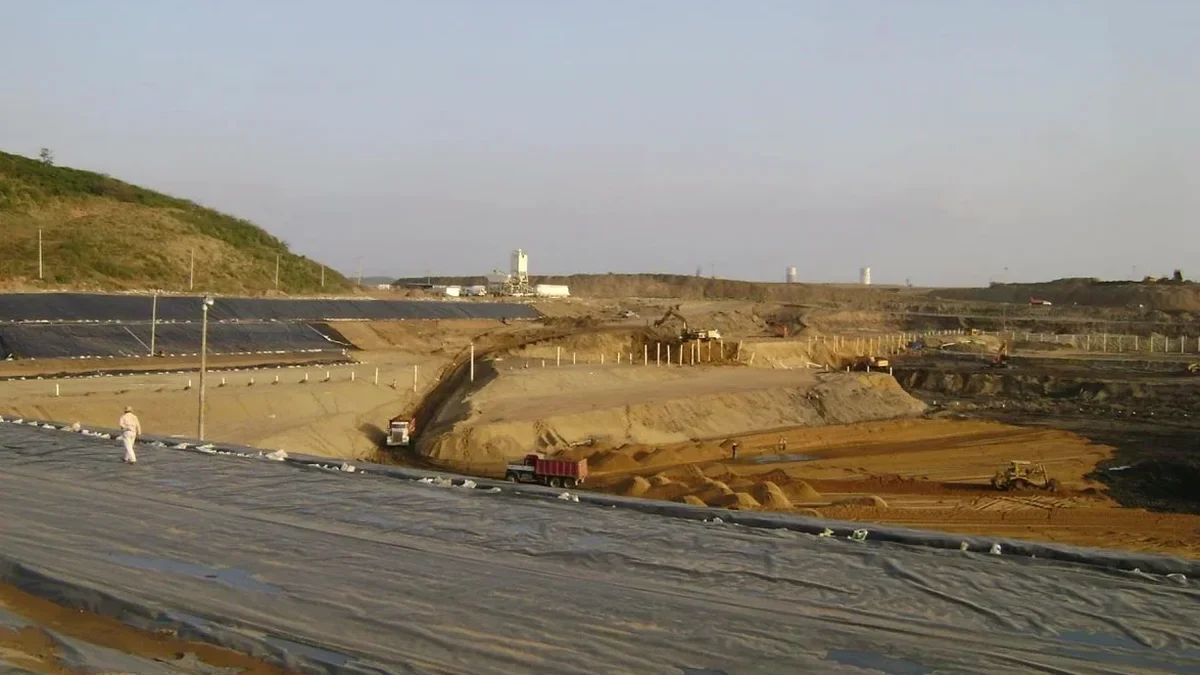
Typical technical challenges in Wilmington Delaware
ASCE 7-22 Section 12.13 puts Wilmington in a region where site class effects can amplify ground motion by a full category compared to rock. If you underestimate the soil stiffness from SPT blow counts alone, the seismic earth pressure on the wall can be off by 30 percent or more. We have seen projects where a contractor submitted a shoring design based on presumed Type C soil, but our lab data showed the clay was actually a stiff, fissured material that drained rapidly under excavation unloading. That misclassification would have led to an under-designed waler system. The bigger risk in this city is the tidal influence from the Delaware River. A 4-foot tidal swing changes the hydrostatic pressure behind the wall twice a day. We incorporate the measured permeability from falling-head tests into the flow net, then size the dewatering system to handle the full tidal range. Ignoring that cycle leads to base heave in the bottom of the cut, and we have the case histories to prove it.
Our services
We handle the full design workflow, from subsurface investigation through to the sealed shoring drawings.
Subsurface investigation for excavations
Drilling, sampling, and SPT logging focused on the depth of influence of the proposed cut.
Laboratory strength and consolidation testing
Triaxial, direct shear, oedometer, and Atterberg limits on undisturbed samples from the excavation zone.
Shoring and bracing design
Calculation of earth pressure envelopes, strut loads, waler sizing, and soldier pile embedment per IBC.
Dewatering and groundwater control plan
Permeability testing, flow net analysis, and well point or deep well system design for tidal conditions.
Questions and answers
What does a geotechnical design for a deep excavation in Wilmington typically cost?
The design package, including subsurface investigation, lab testing, and shoring calculations, typically falls between US$2,240 and US$7,710. The spread depends on the depth of the cut, the number of borings required, and the complexity of the groundwater conditions, especially near the Christina or Brandywine rivers.
How deep can you design an excavation in the Wilmington coastal plain soils?
We routinely design excavations down to 65 feet. The limiting factor is usually the bearing layer for the toe of the wall. In the Potomac Formation, we look for the stiff, overconsolidated clay or a dense sand layer that provides reliable passive resistance.
Do you need lab tests, or can you use SPT blow counts alone for the design?
SPT data gives you a starting point, but for braced excavations deeper than 15 feet, the IBC requires strength parameters from laboratory testing. We run triaxial and consolidation tests because the undrained shear strength and the preconsolidation pressure control the wall deflection, and correlations from blow counts alone are not reliable in Wilmington's mixed soils.