In Wilmington, the difference between a pavement that lasts 8 years and one that needs patching after the second winter often comes down to what's underneath. We see it regularly on projects along Kirkwood Highway and in the Riverfront area — the upper few feet of soil look fine during summer grading, but the silty clays of the Coastal Plain lose significant stiffness when moisture content rises in late fall. A flexible pavement design that ignores seasonal subgrade variation is just a gamble. Our approach starts with CBR testing on undisturbed samples taken at finished subgrade elevation, because the soaked CBR value — not the dry one — is what governs long-term performance. We then build the layer thicknesses using AASHTO 93, adjusting for the ESALs the client actually expects, not some generic county minimum. For commercial lots where truck traffic patterns are predictable, we also tie the structural number to plate load test results to verify modulus assumptions before the first ton of stone base goes down.
A soaked CBR of 3% on Potomac Formation silts requires almost double the base thickness of a 6% CBR subgrade — and in Wilmington east of I-95, that's the difference between a 20-year pavement and a 7-year failure.
Technical details of the service in Wilmington Delaware
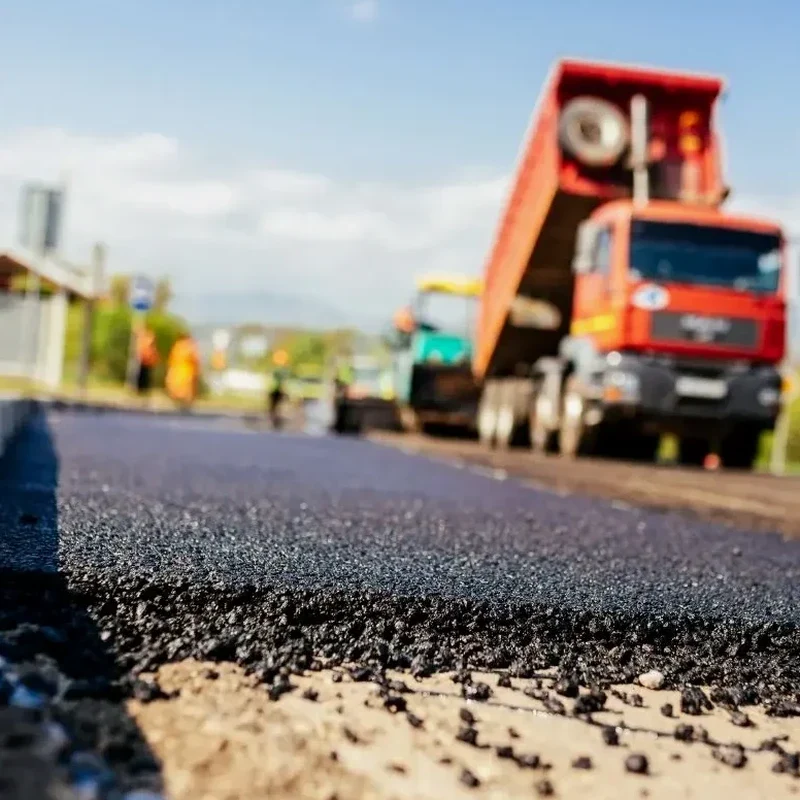
Typical technical challenges in Wilmington Delaware
A warehouse project off Route 13 taught us this lesson the hard way — not our design, but we were called in to diagnose the failure. The original pavement section used a standard cross-section from a generic geotechnical report. No one accounted for the fact that the subgrade was a low-plasticity silt (ML) with 92% fines, and the water table sat at 3.5 feet below grade. After two years of semi-trailer traffic, rutting exceeded 2 inches in the loading bays. The fix cost triple what a proper investigation would have. Wilmington sits on the Atlantic Coastal Plain, and the Potomac Formation clays that underlie much of the city east of I-95 have CBR values that can drop below 3% when saturated. If your flexible pavement design skips the soaked CBR and relies on assumed values from a county soil map, you're rolling dice with a six-figure asset. We also check for frost susceptibility — Delaware's winter freeze-thaw cycles penetrate 18 to 24 inches, and silty subgrades that pump water upward create the perfect conditions for spring breakup. The grain size analysis we run on every project tells us whether the fines are in the dangerous range for frost heave, and we adjust the base course thickness accordingly.
Our services
Our flexible pavement design work in Wilmington covers everything from preliminary subgrade investigation through final layer thickness recommendations and construction specifications. Each project includes a site-specific geotechnical report with test data, not just a cover letter with assumed values.
Subgrade investigation and CBR testing
We sample at finished subgrade elevation using test pits or SPT borings, then run soaked CBR tests in our AASHTO-accredited lab. Results feed directly into the structural design model.
AASHTO 93 pavement thickness design
Layer thicknesses computed for the design ESALs, subgrade CBR, and selected materials. We provide a detailed structural number breakdown for each layer.
Material specifications and construction QA
Gradation envelopes, compaction requirements, binder grades, and mix design verification. We can also oversee field density testing during construction.
Pavement rehabilitation design for existing lots
Falling weight deflectometer (FWD) testing plus coring to evaluate remaining life. Overlay thickness design using the AASHTO effective structural number approach.
Questions and answers
What's the typical cost range for flexible pavement design on a commercial parking lot in Wilmington?
For a standard commercial parking lot in New Castle County, the geotechnical investigation and flexible pavement design package typically runs between US$1,670 and US$4,930, depending on lot size, number of borings or test pits required, and the lab testing program. A small lot with two borings and basic CBR testing stays on the lower end. A larger site with multiple subgrade zones, triaxial testing, and a full AASHTO 93 design report with construction specifications moves toward the upper end.
How does the Coastal Plain soil in Wilmington affect pavement performance?
The Potomac Formation silts and clays that underlie much of Wilmington east of I-95 have high fines content and low permeability. When saturated, their CBR can drop below 3%. This means standard pavement sections designed for “normal” subgrades will rut and crack prematurely. We run soaked CBR and triaxial tests to get real strength parameters, not regional defaults, and we often specify a thicker base course or a geotextile separator to compensate.
What is the difference between flexible and rigid pavement design?
Flexible pavement distributes loads through a layered system — the asphalt surface, base, and subbase all contribute to spreading the wheel load before it reaches the subgrade. Rigid pavement uses the structural stiffness of the concrete slab itself. Flexible pavement is more sensitive to subgrade strength, which is why subgrade characterization is the most critical step. We offer both flexible pavement and rigid pavement design, and the choice depends on traffic type, maintenance expectations, and initial budget.
Do you handle DelDOT submittal requirements for road widening projects?
Yes. For projects that tie into DelDOT-maintained roads or require a DelDOT encroachment permit, we prepare pavement design reports that meet the agency's format and content requirements, including the geotechnical investigation report, pavement design calculations per AASHTO 93, and materials specifications per the current DelDOT Standard Specifications.